

There are no products in the cart!

1. Origins in Vibratory Compaction Technology (1934 – 1950)
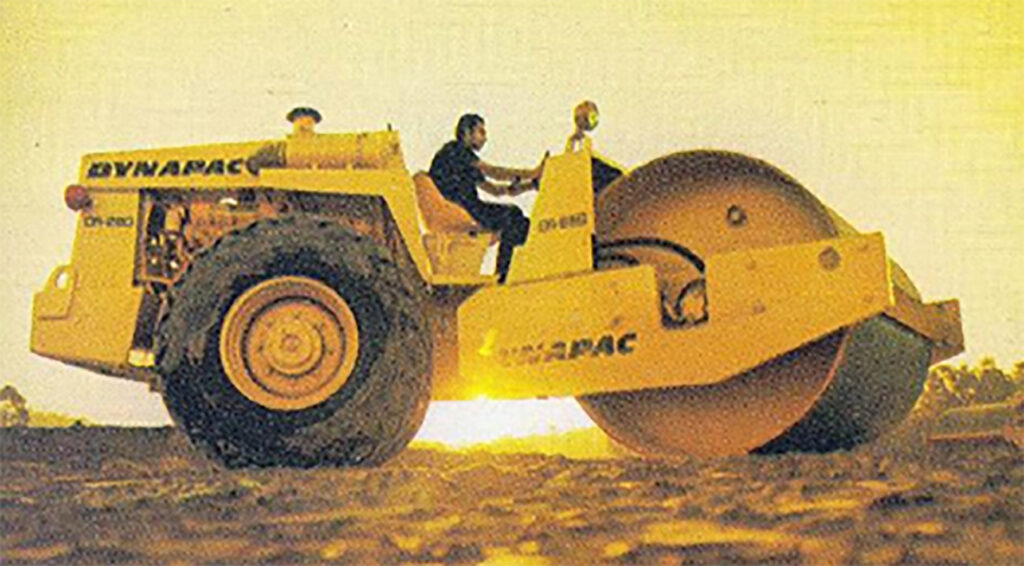
Dynapac began its journey in 1934, when AB Vibro-Betong was founded in Stockholm, Sweden. The company’s initial goal was to research and apply vibratory technology in the construction industry to improve the efficiency of material compaction.
A significant turning point occurred in 1936 when Swedish engineer Hilding Svenson successfully developed vibratory compaction technology. This technological foundation completely transformed the methods of foundation and road surface construction.
Previously, the compaction process primarily relied on the static weight of equipment, resulting in low compaction efficiency and consuming a lot of time. Dynapac’s vibratory technology allowed for:
Increased material compaction capability
Reduced construction time
Improved quality of roadbed structure
By 1940, the company changed its name to Vibro-Verken, reflecting its development focus on vibratory technology.
In 1947, Dynapac introduced its first vibratory compactor, known as the “Frog”. This is considered one of the world’s first commercial vibratory compaction machines.
The introduction of this equipment laid the foundation for an entirely new field in the construction industry: specialized vibratory compaction equipment.
2. Advancing into Road Construction Equipment (1950 – 1970)
After its success with vibratory compaction technology, Dynapac began expanding into large-scale road construction equipment.
In 1953, the company produced its first vibratory roller for road construction. This marked a milestone in applying vibratory technology to road rollers – a significant advancement in the infrastructure construction industry.
These vibratory rollers quickly proved superior efficiency compared to traditional static rollers, thanks to:
Higher subgrade compaction
Faster construction
Reduced number of passes
By 1959, Dynapac further expanded its product portfolio by launching its first asphalt paver.
The combination of pavers and compaction equipment helped Dynapac become a comprehensive solution provider for road paving.
Another significant milestone occurred in 1960 when Dynapac built a factory in Karlskrona, Sweden. This factory subsequently became the company’s main research and production center for decades.
By 1964, Dynapac introduced the CC40 tandem roller model, one of the world’s first modern double-drum vibratory rollers.
This equipment quickly became a benchmark for the road paving industry.
3. Formation of the Global Dynapac Brand (1970 – 1990)
The 1970s marked a period of strong transformation for Dynapac.
In 1970, the company launched the CA25, one of the first articulated self-propelled soil vibratory rollers. The articulated design allowed the machine to:
Move more flexibly
Distribute vibratory force effectively
Increase stability during operation
The CA25 quickly became one of the best-selling soil rollers in the world at that time.
By 1973, the company officially changed its name to Dynapac Maskin AB, and from then on, the Dynapac brand began to be widely known in the international market.
During this period, Dynapac continuously invested in new technologies.
In 1976, the company introduced the Vario TV-screed for asphalt pavers. This technology helped to:
Precisely control the thickness of the asphalt concrete layer
Improve road surface evenness
Increase construction productivity
Concurrently, Dynapac also expanded its scale through numerous acquisitions of engineering companies in Europe and Japan.
These acquisitions helped Dynapac:
Expand technology
Increase production capacity
Penetrate new markets
4. Global Expansion and Technological Innovation (1990 – 2017)
Entering the 1990s and 2000s, Dynapac continued to push its globalization strategy.
One notable acquisition was that of Demag Schrader – a German company specializing in asphalt paver manufacturing.
This combination helped Dynapac enhance its position in the road paving equipment market.
By 2001, Dynapac built a factory in China, marking a strong expansion into the Asian market – the region with the fastest infrastructure development in the world.
During this period, Dynapac also pioneered smart compaction solutions.
In 2005, the company introduced the Dynapac Compaction Optimizer (DCO) system.
This system allowed for:
Real-time measurement of subgrade compaction
Helping operators control compaction quality
Avoiding over-compaction or under-compaction
As a result, contractors could optimize costs and improve project quality.
In 2007, Dynapac became part of the Swedish industrial group Atlas Copco, opening a new phase of development with stronger resources.
5. Joining FAYAT Group – A Strategic Turning Point (2017 – Present)
A significant milestone in Dynapac’s history occurred in 2017 when the French construction group Fayat Group acquired Dynapac from Atlas Copco.
Fayat is one of the world’s largest groups in the field of construction equipment and transportation infrastructure.
After joining the Fayat Group, Dynapac had the opportunity to:
Expand its global distribution network
Intensify research into new technologies
Develop a more comprehensive product portfolio
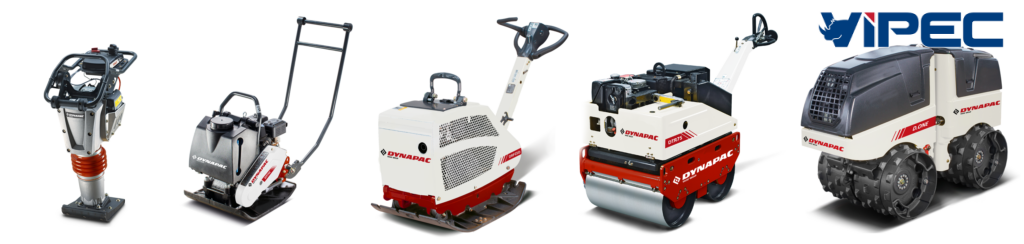
One of the most noticeable changes was the machine’s brand identity color. Dynapac transitioned from its traditional yellow to red – white – grey, creating a more modern brand image.
Additionally, Dynapac continued to invest in advanced technologies such as:
Active Bouncing Control (ABC)
Technology that helps prevent bouncing during compaction, ensuring stable and effective vibratory force.
Seismic Compaction Control
A compaction control system based on oscillation analysis, helping operators accurately determine the compaction level of the subgrade.
Z.ERA – emission reduction equipment
Dynapac is also developing equipment lines aimed at reducing emissions and being environmentally friendly, aligning with sustainable construction trends.
6. Dynapac in Modern Infrastructure Construction
After over 90 years of development, Dynapac has become one of the world’s leading brands in road construction equipment.
The company’s product portfolio currently includes:
Dynapac equipment is used in:
Thanks to the combination of pioneering technology, equipment durability, and high construction performance, Dynapac has become a trusted choice for construction contractors worldwide.
From a small engineering company in Sweden in 1934, Dynapac has grown into a global brand in the field of road construction equipment.
Dynapac’s contributions – especially vibratory compaction technology and smart compaction control systems – have significantly improved the quality and efficiency of transportation infrastructure projects worldwide.
With the backing of the Fayat Group and a strategy of technological innovation, Dynapac continues to affirm its position as one of the world’s leading manufacturers of road construction equipment, accompanying the development of modern infrastructure construction.

03-2026

03-2026

03-2026

03-2026

03-2026
12/03/2026