

There are no products in the cart!

In the heart of Hanoi, within the sacred space west of Thang Long Imperial Citadel, One Pillar Pagoda stands as a unique architectural symbol – a convergence of the historical, religious, artistic, and construction engineering essence of the Vietnamese people. For nearly a millennium, the image of a lotus blossom rising from the water, firmly standing on a single stone pillar, quietly reminds us of the value of inner strength, balance, and a sustainable foundation.
This is also the core philosophy that Tadano crawler cranes pursue in the modern industrial world.
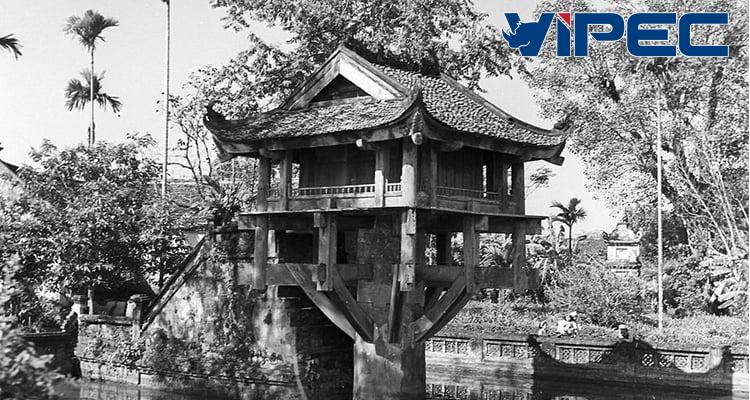
One Pillar Pagoda, also known as Diên Hựu Pagoda, Liên Hoa Đài, or Nhất Trụ Tower, was built in 1049 during the reign of King Lý Thái Tông. According to Đại Việt sử ký toàn thư (Complete Annals of Đại Việt), the pagoda originated from a sacred dream: the king dreamt of Avalokiteshvara Bodhisattva sitting on a lotus throne, extending a hand to lead the king onto the platform. Upon waking, the king ordered the construction of the pagoda in the image of a thousand-petaled lotus, praying for peace and prosperity for the nation and a long-lasting dynasty. The name Diên Hựu, meaning “long-lasting blessings,” also stems from this.
Located within the Diên Hựu Pagoda complex, One Pillar Pagoda has only a single chamber, placed on a stone pillar in the middle of Linh Chiểu Lake, surrounded by lotus flowers – a symbol of purity and enlightenment. From a distance, the entire structure resembles a large lotus blossom rising elegantly and firmly from the water.
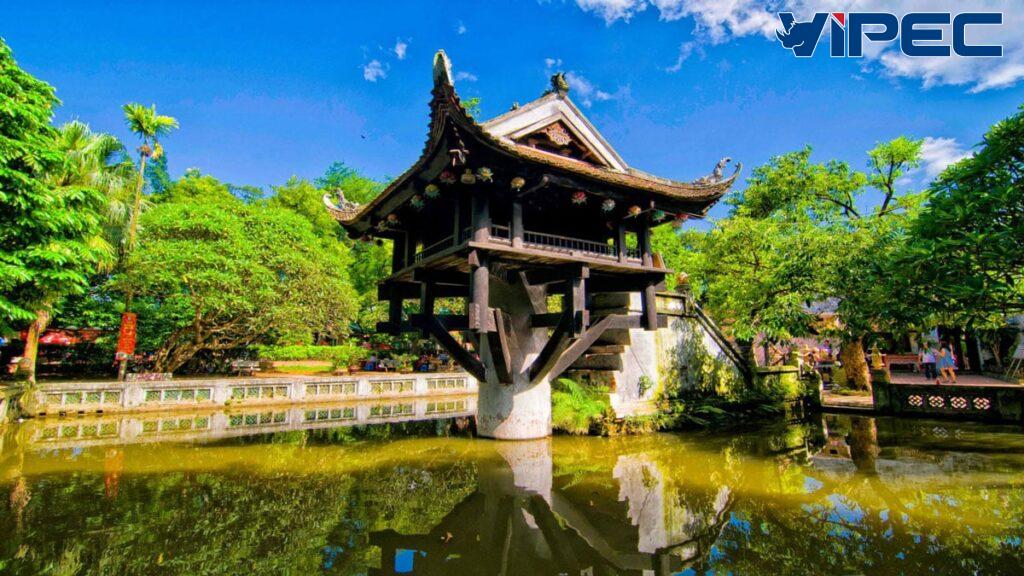
The most distinctive feature of One Pillar Pagoda lies in its architectural structure:
A stone pillar with a diameter of 1.2m and a height of approximately 4m, skillfully composed of two blocks joined seamlessly as one.
Above it is a sturdy wooden frame system, supporting the entire square-shaped pagoda chamber, covered with traditional tiles, with four curved roofs, and two dragons flanking the moon at the peak.
The system of diagonal support columns, tie-beam foundations, and wooden structures was precisely calculated, ensuring both load-bearing capacity and creating a soft aesthetic effect like lotus petals.
Given the technical conditions of the 11th century, this was a bold structural solution, demonstrating the ancient Vietnamese people’s level of spatial thinking and profound understanding of load, balance, and foundations. It is this harmonious combination of artistic imagination and practical engineering that has allowed One Pillar Pagoda to stand firm through many centuries, despite undergoing numerous renovations under the Trần, Lê, and Nguyễn dynasties.
A symbol of balance, longevity, and humanity
According to many researchers, One Pillar Pagoda embodies a profound philosophy:
The square shape (pagoda platform, pond) symbolizes Yin
The circular shape (stone pillar) symbolizes Yang
→ creating harmony between Yin – Yang, heaven – earth, human – cosmos
More than just a religious structure, One Pillar Pagoda is also a symbol of wisdom, longevity, and a benevolent spirit. In 1962, the pagoda was classified as a National Historical-Architectural Artistic Monument; in 2006 and 2012, it successively set Vietnamese and Asian records, affirming its unique value on the regional heritage map.
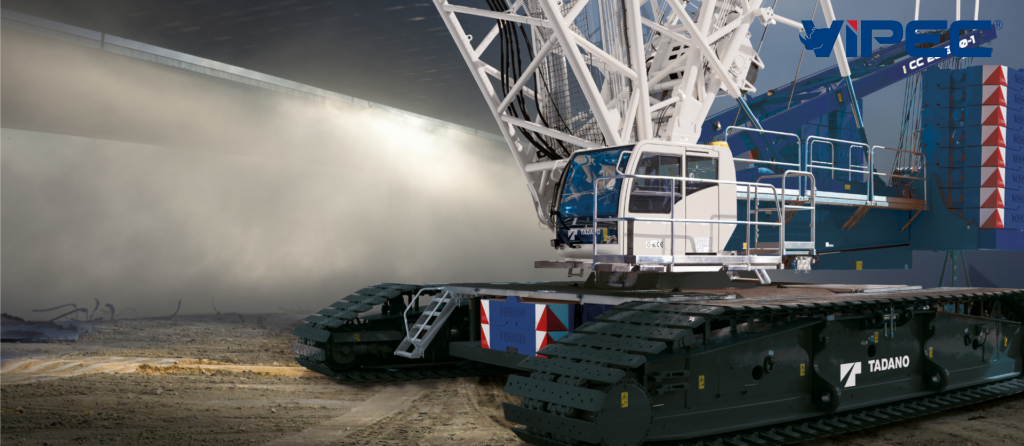
If One Pillar Pagoda is a testament to the philosophy of “less is more, one support – myriad lifts,” then Tadano Crawler Cranes are the embodiment of that philosophy in the modern lifting industry.
With over 100 years of history since its inception in 1919 in Japan, Tadano has always focused on:
Absolute stability
Operational safety
Long-term efficiency
Why are Tadano crawler cranes likened to “mobile foundations”?
Unlike crane models prioritizing speed, Tadano crawler cranes are designed for projects requiring:
Optimal load distribution capability, especially on soft ground
High traction, resistance to settlement and slippage
Lifting heavy loads with high precision
Ability to move while carrying a load, ensuring efficiency and safety
Thanks to their wide track system and optimized chassis structure, Tadano crawler cranes are an ideal choice for:
Transportation infrastructure projects
Heavy industrial plants
Energy projects, seaports
Projects requiring strong foundations and high stability
Between One Pillar Pagoda and Tadano crawler cranes, despite being separated by nearly a millennium, there is a clear point of intersection:
To reach high, one must first root deep.
One Pillar Pagoda stands firm not by its size, but by its foundation and absolute balance. Tadano crawler cranes conquer projects not through ostentation, but through stability, precise calculation, and enduring inner strength.
That is why both have become symbols:
One is a cultural – architectural heritage
The other is an engineering – industrial standard
But both share a common core value: sustainability from the roots.
March Message – Strong Foundations for Reaching High
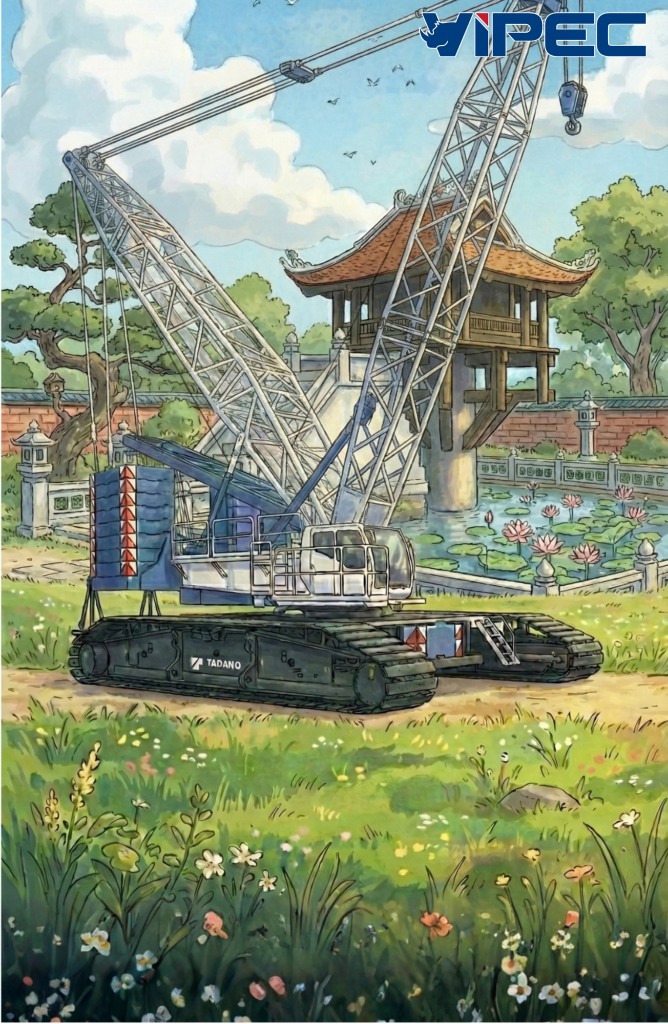
A single lotus pillar stands tall and serene,
Tadano crawlers grip, lifting into peace.
March – a time of rebirth and development – reminds us that all enduring structures begin with a solid foundation and a sound philosophy.
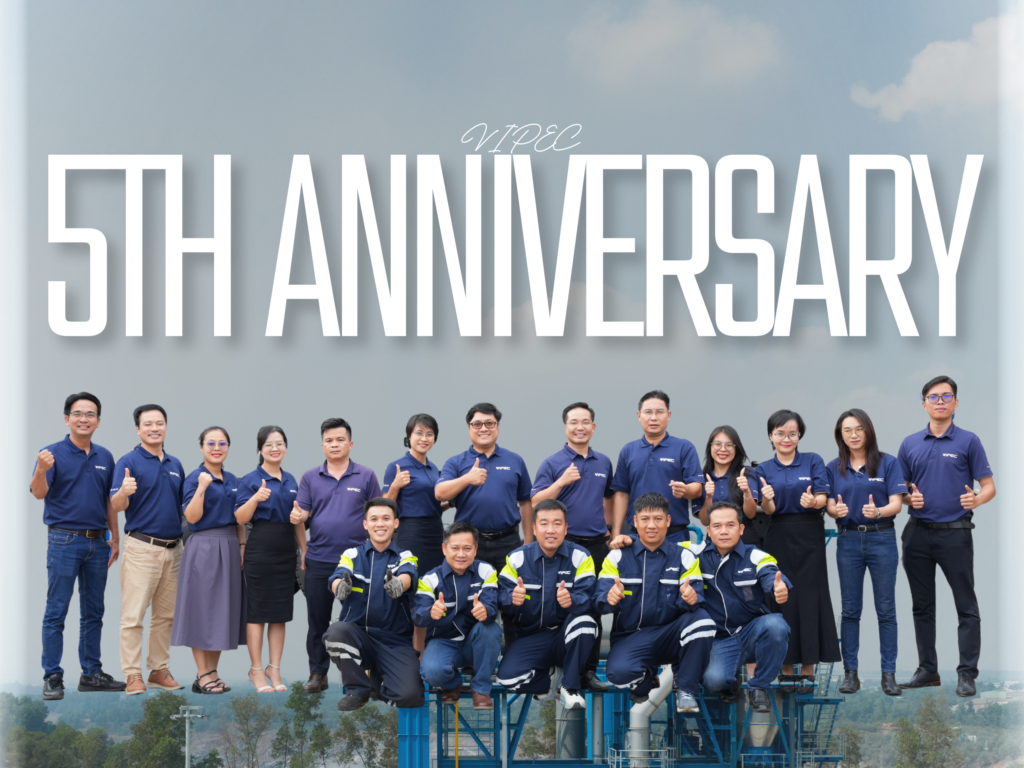
03-2026

03-2026

03-2026

03-2026

03-2026